
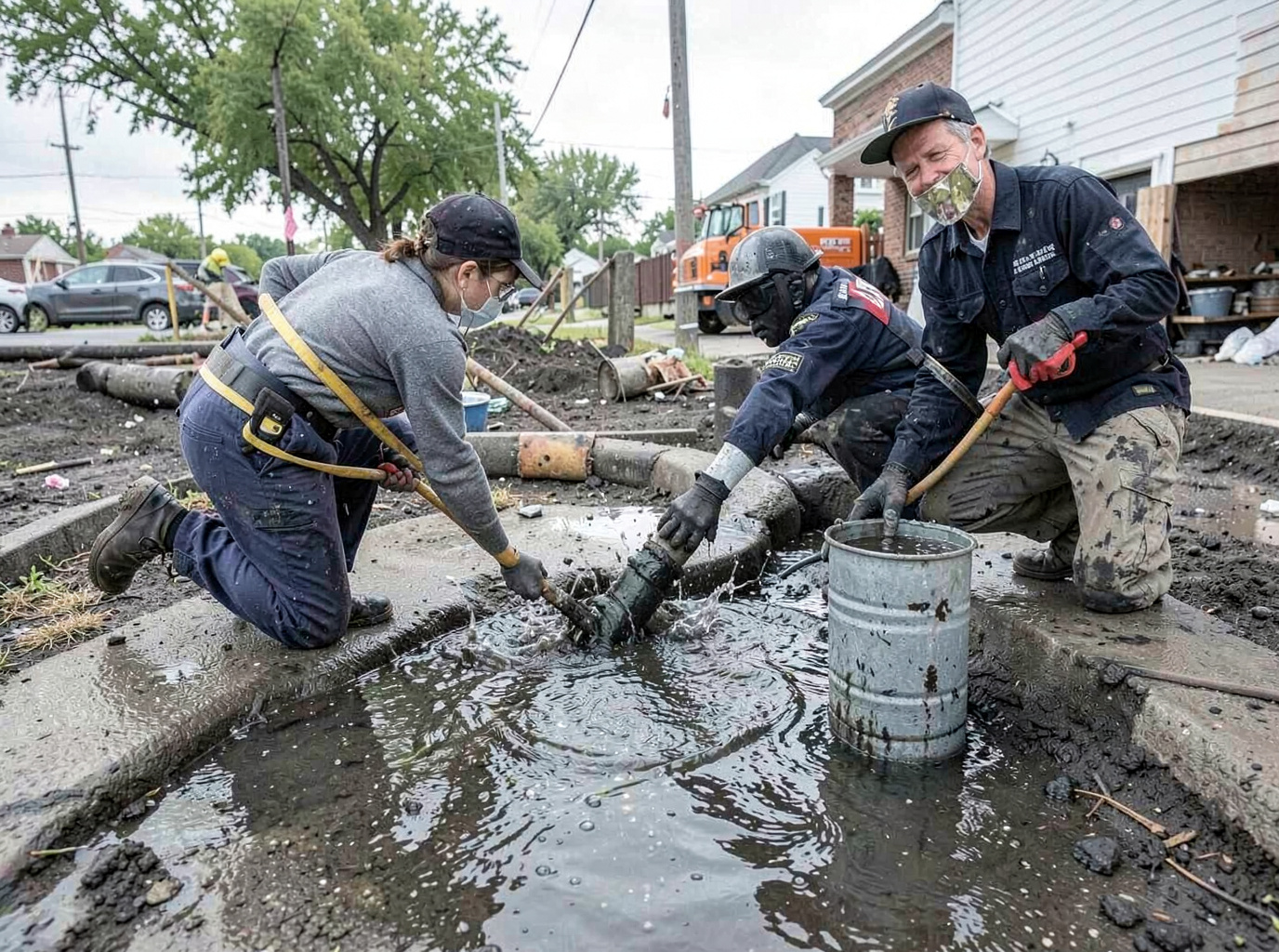
Frozen and burst pipes in Omaha winters
Omaha winters regularly bring stretches of below-zero nights, and that is when pipe failures spike. Water expands as it freezes, building pressure until the pipe splits. The break often stays hidden until the thaw, when water suddenly pours out of a wall, ceiling, or basement line. Pipes in exterior walls, crawl spaces, unheated garages, and under kitchen and bathroom sinks on outside walls are the most at risk.
Older homes in neighborhoods like Dundee, Benson, and Midtown add another risk: galvanized and older copper lines that have corroded over decades and fail under pressure. Newer homes in West Omaha and Elkhorn are not immune either. A single split line feeding a finished basement can soak carpet, pad, drywall, and insulation across several rooms.
What to do right now if a pipe bursts
- Shut off the main water valve. In most Omaha homes it is in the basement near the front wall, where the water line enters.
- Turn off power to wet areas if you can safely reach the breaker panel.
- Open faucets to drain the remaining water from the lines.
- Move valuables and furniture off wet floors.
- Take photos and video of the damage before cleanup for your insurance claim.
- Call for help. Water extraction and drying should start as soon as possible to limit mold and structural damage.
How cleanup works
A restoration provider removes standing water, then uses moisture meters and often thermal imaging to find water hiding inside walls, under flooring, and in ceilings. Air movers and dehumidifiers dry the structure over several days, with readings taken until materials are back to normal. Wet carpet pad, insulation, and drywall that cannot be dried are cut out and removed. You will usually also need a plumber to permanently repair the broken pipe.
Preventing frozen pipes
When a hard freeze is in the forecast, keep your thermostat at 55°F or higher (even when away), let faucets on exterior walls drip, open sink cabinet doors so warm air reaches the pipes, disconnect garden hoses, and insulate pipes in crawl spaces and garages. If you leave town in winter, consider shutting off the main and draining the lines.
Technician insight
Homeowner tip: In older Dundee and West Omaha homes with tongue-and-groove hardwood, water can soak the subfloor even when the surface looks dry. Ask how the provider will check under the flooring before calling the job done.
Example situation: A frozen pipe in an exterior wall
During a January cold snap, a supply line in an exterior wall freezes and splits overnight. When it thaws the next afternoon, water runs through the first-floor wall and into the finished basement below. After shutting off the main, the homeowner calls to get connected with a local provider, who extracts the water, opens the wall to dry the cavity, and sets up drying equipment in the basement.
Burst Pipe Water Cleanup Services We Offer
✓Emergency Water Extraction
Standing water is pumped and vacuumed out of floors, carpet, and basements as soon as possible after the break.
✓Structural Drying
Air movers and dehumidifiers dry walls, ceilings, and subfloors, with moisture readings until materials are fully dry.
✓Basement Water Removal
Extraction and drying for finished and unfinished basements, where burst pipe water usually ends up.
✓Ceiling and Wall Water Damage
Wet drywall, plaster, and insulation are checked for hidden moisture and removed or dried as needed.
✓Hardwood Floor Water Damage
Hardwood and subfloors are dried with specialized equipment to reduce cupping and warping.
How it works
- 1
Call Anytime
Call our free 24/7 referral line and describe the pipe break and where the water went.
- 2
Get Connected
Your call is routed to an independent water damage restoration provider serving your part of the Omaha metro.
- 3
Talk With the Provider
The provider asks about the damage and explains how they would handle extraction and drying.
- 4
Cleanup and Drying
If you hire them, the provider inspects, gives you pricing, and handles extraction, drying, and cleanup.
Pricing
Burst pipe cleanup cost depends on how long the water ran, how many rooms and floors were affected, whether a finished basement is involved, what materials must be removed, and how many days of drying are needed. The provider you speak with sets pricing after seeing the damage.